
Disclaimer:
This article reflects the opinions of OK GOP Uncovered and is based solely on public campaign content from U.S. Senate candidate N’Kiyla “Jasmine” Thomas. This is political commentary protected under the First Amendment.
Oklahoma needs serious, steady leadership in the U.S. Senate, not a content creator approach to campaigning. After watching Jasmine Thomas’s public videos, posts, and messaging, it is clear that her campaign raises real questions about professionalism, depth, and readiness for a federal role.
This is not personal. It is about how she presents herself publicly while running for the United States Senate.
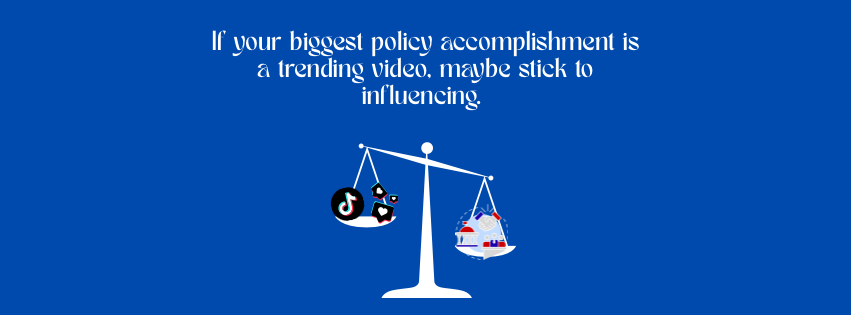
Influencer Politics Is Not Serious Politics
There is a growing trend of candidates choosing an influencer style over a traditional campaign. Fast edits, trendy audio, playful captions, and personal branding are becoming the norm. Scholars often call this influencer-politics.
Thomas leans heavily into this approach.
Her TikToks are creative and clearly produced, but rarely focused on actual policy. At times, her social channels read more like a lifestyle creator’s page than a federal campaign.
Followers are fine. Federal legislators need more than engagement metrics.
Messaging That Feels More Template Than Transparent
Many of her long-form posts follow a predictable pattern that includes lists of identities, broad emotional appeals, and vague policy buzzwords. Researchers refer to this as synthetic authenticity, which describes language that sounds personal without offering real substance.
Talking about identity is not the issue.
Using identity in place of qualifications is.
The U.S. Senate requires policy depth, constitutional understanding, and a serious approach to governing. Her online messaging does not reflect that level of preparation.
When Code-Switching Starts to Look Like Audience Targeting
Code-switching is normal and often part of everyday communication. The concern arises when it appears performative or inconsistent.
Online, Thomas shifts noticeably between personas.
She uses a polished and formal style in her campaign videos, then adopts a dramatically different tone and manner in casual TikToks filmed for specific audiences.
This is not about race, culture, or background.
It is about presenting different versions of oneself depending on the camera.
Authenticity matters in politics. Voters notice inconsistency.
Professionalism Still Counts, Even in a Digital Age
One of her TikToks highlighted a message from a stranger who said they would vote for her because she was “fine as hell” and because they wanted “baddies in office.” Her public response was:
“I mean… they are valid 🤷🏽♀️”
It might be cute for an influencer.
It is not the tone most people expect from someone seeking a seat in the United States Senate.
This office handles national defense, budgets, treaties, and federal law. Public responses to flirtatious comments may play well online, but they do not reflect the seriousness required for a federal role.
Policy Points That Do Not Add Up
Several of her platform positions contradict basic policy and economic realities:
• Raising wages while supporting small farms
Labor costs already strain small agricultural operations. Raising the wage floor without addressing the economics behind it is not realistic.
• Lower childcare costs without hurting providers
Federal childcare funding comes from taxes. Ignoring that trade-off oversimplifies the issue.
• Landlord accountability without rent increases
Regulations always introduce cost, and those costs eventually show up in rental prices.
These are not personal criticisms. They are policy gaps, and they matter.
Oklahoma Deserves Serious Leadership
Thomas deserves credit for running. Anyone who steps into the arena should be acknowledged for the effort.
However, based on her public-facing campaign, the overall approach feels more aligned with influencer branding than a serious bid for the United States Senate. Oklahoma voters deserve leadership rooted in professionalism, policy knowledge, consistency, and substance over aesthetics.
Her current campaign materials do not demonstrate that.
This is our opinion, and it reflects concerns that many Oklahomans have expressed.
Sources
Abidin, C. (2018). Internet Celebrity.
Munger, K. (2022). Generation Gap.
McCluney, C. (2019). “The Costs of Code-Switching.” Harvard Business Review.
Pereira, C. (2023). “Synthetic Authenticity.” Communication Theory.